Moss
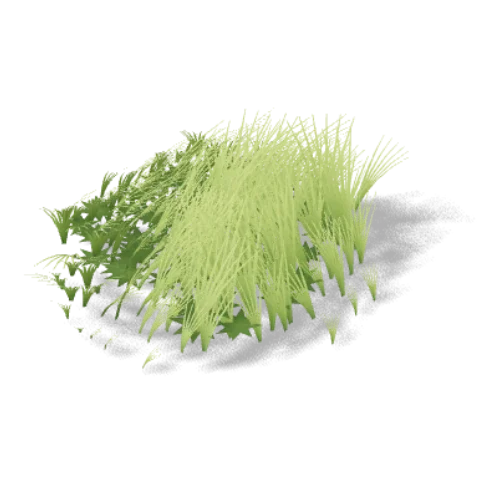
Mood moss
Dicranum scoparium
EasyFine in a closed jar
Glossy tufts of swept, curved leaves. The classic mood moss.
What the simulation uses
- Light
- 1,500 to 15,000 lux
- The brightness it grows well in.
- Humidity
- 55 to 95 % RH
- Air moisture it is happy in; below the lower end it dries out.
- Temperature
- 8 to 24 °C
- Comfortable range; outside it growth slows.
- Dies at
- below -25 or above 45 °C
- Days beyond these temperatures kill it.
- Soil pH
- 4 to 5.5 pH
- Soil acidity it prefers.
- Grows up
- 0.1 cm/month
- How fast it gains height in good conditions.
- Spreads
- 0.05 cm/month
- How fast its edge creeps outwards.
- Thickens
- 1.25 %/month
- How fast its cover fills in on its own ground.
- Copes with wet
- fair
- How well it stands soggy soil; poor means rot comes quickly.
- Copes with still air
- fair
- Sealed jars have still air; poor means grey mould finds it.
- Copes with shade
- good
- How well it holds on in dim light.
- Copes with drying
- good
- How well it survives the jar drying out.
- Water use
- 0.035 ml/cm²/day
- Water that evaporates off the cushion each day in room air.
- Holds water
- 0.25 ml/cm²
- Water a cm² of moss soaks up and keeps.
- Grows on
- soil, stone, wood
- Where it can take hold and spread. Moss that cannot grow on stone thins out there.
Care
- Day length
- 10 to 14 h
- Substrate
- Moist
What kills it
- waterlogging
- lime
- constantly wet foliage with no airflow
Description
Tufts stand 2 to 8 cm tall on moist, acid forest soil and handle a dry spell better than most. Waterlogging, lime and leaves that stay wet in still air are its weak points. Give it acid soil and a little air movement.
Also called broom fork-moss, broom moss, wind-swept moss.
Estimated, where sources were thin: growth rate; photoperiod_h.