Ecosystem builder
Closed ecosystem simulator
A sealed jar is a small closed ecosystem: water, plants, soil, a cleanup crew and mould, with nothing added from outside but light. Glass Jar Garden simulates one day by day, so you can build your own and see whether it holds together.
What a sealed jar recycles
- Water: plants breathe it out, it beads on the glass and runs back down to the soil.
- Food: fallen leaves and old soil rot slowly, releasing the carbon and nitrogen plants grow on.
- Waste: springtails graze mould, isopods and worms break down litter and rotting wood.
- Energy: light is the one thing that comes in. Too little and plants starve; direct sun cooks the jar.
The real thing
The best-known example is David Latimer's bottle garden: a spiderwort sealed in a glass carboy in 1960, reported to have been watered only once, in 1972, and still growing decades later (Wikipedia, Snopes). The simulator's own checks rebuild jars like it: a nine-year carboy left alone stays alive, its tradescantia the biggest plant. Checked against real jars lists all fourteen.
What is simulated
- Needs and healthEach day every living thing scores its needs; health follows the score.
- Death and hazardsOnly hazards kill, each rising from zero at its threshold.
- SoilLayers drain, hold water, feed plants and set the pH the roots feel.
- WaterSoil fills to what it can hold; the rest drains to the drainage layer.
- Humidity and the lidSealed jars keep every drop; open jars lose water to the room.
- LightThe day's light, brightness times hours, drives growth.
- TemperatureThe jar follows the room, a little warmer under a lamp.
- PlantsPlants grow on light and food, share space, and stop at the lid.
- MossMoss creeps from its edges in damp air and browns back when dry.
- CrittersEach crew is a colony that grows to what the jar can feed.
- MouldWhite mould blooms on fresh organics and leaves; springtails eat it.
- CareMist, water, vent and tidy, by hand or on a routine.
- Chance and forecastsTwo things are random; everything else repeats exactly.
- Checked against real jarsFourteen jars their owners described online, rebuilt and run: all fourteen turn out the way the real ones did.
Build your own
Choose the glass, pour the layers, plant it, add the crew, then seal it and run time at a day a second. Some jars thrive for years; others rot, cook or dry out, and the simulator says why.
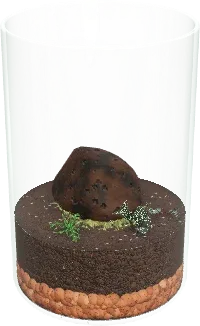 Beginner jareasy
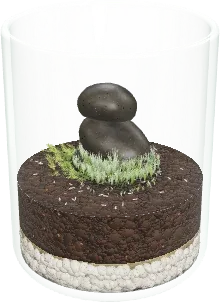 Moss jareasy
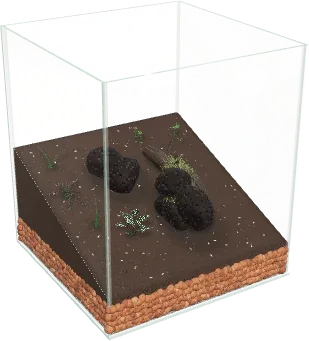 Paludarium litehard
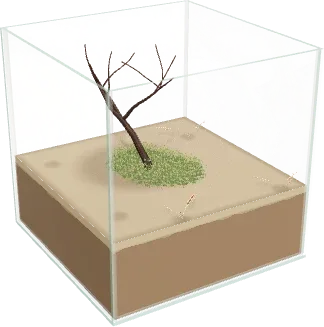 Carnivore bogmedium
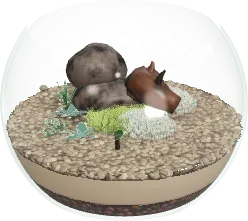 Desert bowleasy
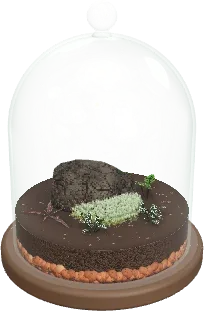 Cloche gardeneasy
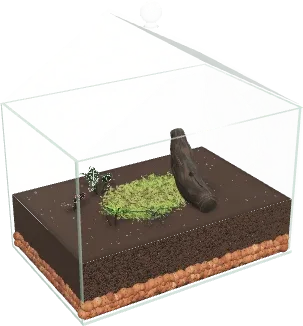 Wardian casemedium
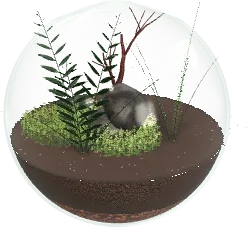 Mini forestmedium
Building a real one? Start with the terrarium simulator and the layers.