Plants
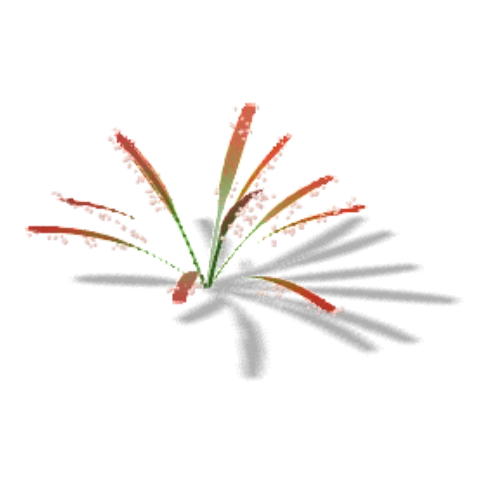
Cape sundew
Drosera capensis
BeginnerFine in a closed jar
Long leaves beaded with sticky dew. Easy, if it gets bright light and pure water.
What the simulation uses
- Light
- 10,000 to 30,000 lux
- The brightness it grows well in.
- Humidity
- 50 to 90 % RH
- Air moisture it is happy in; below the lower end it dries out.
- Temperature
- 10 to 35 °C
- Comfortable range; outside it growth slows.
- Dies at
- below -2 or above 40 °C
- Days beyond these temperatures kill it.
- Soil pH
- 4 to 5.5 pH
- Soil acidity it prefers.
- Grows up
- 1.25 cm/month
- How fast it gains height in good conditions.
- Spreads
- 1.25 cm/month
- How fast its edge creeps outwards.
- Copes with wet
- excellent
- How well it stands soggy soil; poor means rot comes quickly.
- Copes with still air
- good
- Sealed jars have still air; poor means grey mould finds it.
- Copes with shade
- fair
- How well it holds on in dim light.
- Copes with drying
- poor
- How well it survives the jar drying out.
- Water use
- 0.07 ml/cm²/day
- Water drawn up from its roots per cm² of leaves in room air; a sealed jar cuts this to a fraction and returns it down the glass.
- Leaf drop
- 3 %/month
- Share of its leaves it sheds each month as litter for the cleanup crew.
- Soft leaves
- yes
- Soft new growth that hungry isopods will nibble.
- Full size
- 15 cm tall, 20 cm wide
- Its size when grown, before the lid stops it.
Care
- Day length
- 12 to 16 h
- Substrate
- Wet
What kills it
- fertiliser in soil
- tap water minerals
- letting the medium dry
- deep shade
Description
Few carnivores are easier, and this subtropical sundew is among the best for a terrarium. Strong light brings out the sticky dew and red tints. Water only with rain or distilled water, and plant it in a poor peat and sand mix.
Also called sundew.
Estimated, where sources were thin: light_lux; ph; temp_lethal_c; humidity_rh_pct.